


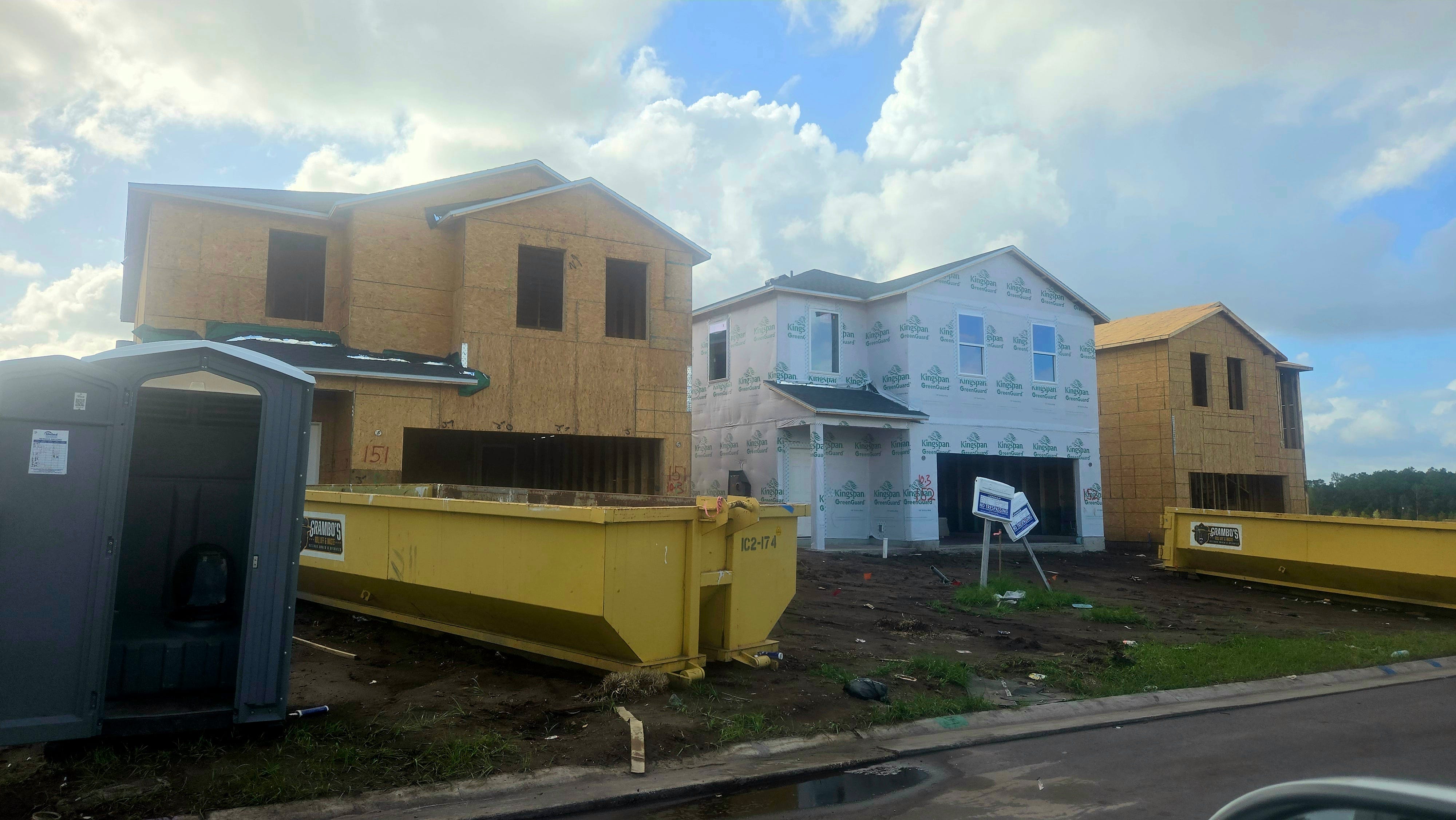
D.R. Horton and Lennar are the vanilla and chocolate ice cream of American homebuilders. They are Numbers 1 and 2 respectively for new home closings in the U.S., and probably in Florida, too.
In Clay County, they account for nearly 5,500 homes recently sold, about to be sold or under construction. Just because they are numerous doesn’t mean they sell cheap, these homes start at around $350,000 and top off at around a half million dollars.
D.R. Horton developments include the Rookery and Cross Creek. Lennar is developing Granary Park, Russell Retreat and Edenbrooke.
Despite high prices and classy sounding names, buying a home from these outfits comes with some risk, if their litigation history is any indicator. For the homeowner-plaintiffs, their “house from hell” lawsuits tell tales of financial stress and misery. On the other side, litigation alleging shoddy construction or fraud represents just another cost of doing business—based on builder statements to their stockholders.
A class-action lawsuit filed on December 3 in Nevada alleges that D.R. Horton and its subsidary lender ran a bait-and-switch scheme to convince folks to buy homes they really could not afford.
Meanwhile, the Seminole Tribe of Florida has sued Lennar alleging that more than 500 homes built for the tribe were so crappy that they need repairs “amounting to tens, if not hundreds of millions of dollars.” Writing in a lawsuit filed in Broward County Court, lawyers for the tribe said many of the homes in question have had occupancy permits revoked:
For many of the homes, experts have determined that the roofing issues are so severe as to render the roofs unrepairable and requiring full replacement. Also, one manifestation of the air- and moisture-intrusion defects plaguing the units constructed by Lennar is “ghosting”around interior light fixtures. Ghosting, also referred to as “thermal tracking,” is the buildup of soot and other particulates due to moisture intrusion and improper insulation,and is often a powerful catalyst for the formation and buildup of more dangerous biological elements such as mold.
Lennar is also being sued in South Florida for alleged faulty construction in three developments in Homestead.
The suit against D.R. Horton alleges that DHI Mortgages concealed actual monthly payment amounts from potential homebuyers by purposefully underestimating property taxes. The true tax amount only came to light for many buyers once a new mortage service company conducted an unbiased escrow analysis.
D.R. Horton is being sued under a federal anti-racketeering law known as the RICO Act, plus Nevada deceptive trade law. In 2021, the company was sued by Alabama homeowners who alleged that their homes did not meet building codes designed to protect against Category 3 hurricanes.
Publicly traded companies such as Lennar and D.R. Horton are required to issue reports at regular intervals to provide transparency for stockholders. In language that could be described as typical, Lennar advised investors to consider its litigation problems in a greater context:
We are party to various claims and lawsuits relating to homes we sold which arise in the ordinary course of business, but we do not consider the volume of our claims and lawsuits unusual given the number of homes we deliver and the fact that the lawsuits often relate to homes delivered several years before the lawsuits are commenced. Although the specific allegations in the lawsuits differ, they most commonly involve claims that we failed to construct homes in particular communities in accordance with plans and specifications or applicable construction codes and seek reimbursement for sums allegedly needed to remedy the alleged deficiencies.
Lennar’s regional managers did not respond to a request for comment.
Robert Knowles is president and founder of the National Association of Homeowners and a licensed professional engineer who has inspected thousands of new builds. In an interview with Hunterbrook Media, Knowles said D.R. Horton and Lennar set aside $2,348 and $3,602 per home, respectively, to correct defects, but he estimated actual repair costs range from $5,000 to $20,000, assuming no major issues such as siding or roof replacements.
“There is no bonus for building the house to code, for quality. There’s only bonuses for speed … and volume,” Knowles said.
Cheap ugly homes.