

This story is by the folks at the Clay County Archives Center.
Washington Gano Benedict, a man key to the successful development of the Town of Orange Park in 1876, was known for always having great ideas.
One such idea revolved around the need to find a better way to clean and shred palmetto leaves at his Orange Park palmetto factory. He and his business partner in the venture, George Miller, put their heads together and patented a machine that could do just that.
U.S. Patent No. 201,269 was recognized on March 12,1878, with an expiration date of March 12, 1895. It was called “Improvement in the Preparing of Palmetto Fiber and Pine Leaves for Mattress Fillings etc.”
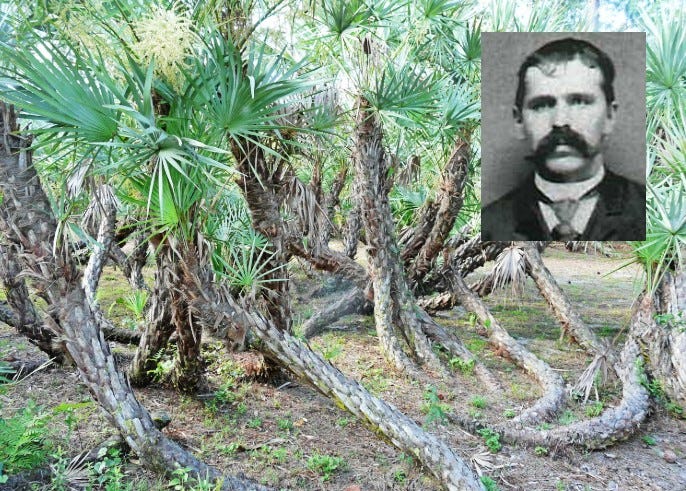
Florida was blessed with seemingly unlimited natural resources when it came to plants like palmettos, with the saw palmetto being a particularly strong example. From the days of the Timucua to today’s modern medicine, the saw palmetto rules supreme.
The plants come in many colors, ranging from green to silvery gray. During spring flowering, three-foot-long flower stalks appear, showing off fragrant, yellow-white flowers.
Benedict and Miller were making stuffing for mattresses and other upholstered items like wagon seats and furniture, such as chairs and sofas. Their special mix had pine needles in it for both scent and “medicinal purposes.” Like Pine Sol, the pine resin kept the bugs away. The factory was located on McIntosh Street, near what would become the entrance to Moosehaven.
The palmetto factory in Orange Park gave women an opportunity to work outside the home. They were paid a dollar a day to gather the palm leaves and pine straw and prepare them to be run through the shredder machine. The women had to wear leather gloves or thick rags wrapped around their fingers to avoid the needle-like “teeth” on the stems.
Getting bit by those teeth was like the poke of red-hot needles. Other palmetto factories around the state produced a wide variety of items: Hats, brooms, rugs, brushes, fly swatters and baskets. Women’s smaller, more nimble hands were particularly suited to the task.
The palmetto factories, while organic and ecologically friendly, were a fire hazard. One palmetto factory burned down in Jacksonville, perhaps a harbinger of the 1901 moss factory fire that burned Jacksonville down. It’s unknown how long Benedict ran the palmetto factory or when it closed officially. Newer, cleaner furniture stuffing options came along, and the idea of a palmetto factory became an Orange Park memory.