


By HISTORICAL ARCHIVES CENTER STAFF
When World War II started, Clay County did not have much of a military presence, but once America joined the battle, the county exploded with growth.
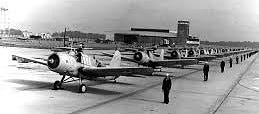
The United States Navy built Lee Field and named it after a local Naval aviator who was killed in World War I, Benjamin Lee. It was officially opened on September 11, 1940. The Navy spent $1.8 million on the base which had four 5,000-foot runways which were heavily used.
Statewide during WWII, there were more people in naval aviation training than are employed today by the Florida State University System. Lee Field was home to famous flight instructors like Johnny Carson’s sidekick Ed McMahon and boasted famous flight students like Joe Kennedy Jr., President Kennedy’s older brother.
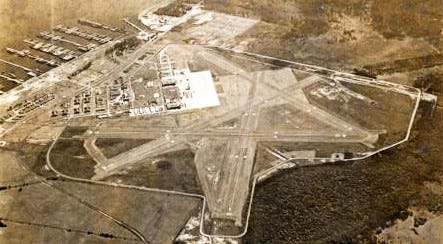
After the war ended, the Lee Field’s riverfront area became home to the Navy’s Mothball Fleet. Thirteen 1,500-foot-long piers were constructed, and hundreds of ships were decommissioned, cleaned, stored and put into “mothballs” for future use.
The facility employed 5,000 Navy personnel and 1,000 civilians. Many Clay County residents are descendants of the sailors stationed at the base, who stayed to make this their home. In 1964, the Mothball Fleet closed shop, and Lee Field became Reynolds Industrial Park. The Military Museum of North Florida is located there and is well worth the visit.
During the same general timeframe, the United States Army was not to be outdone. They turned a Florida National Guard base into Camp Blanding. It was named after General Albert H. Blanding, as is Blanding Boulevard (mostly because the road led to Camp Blanding). At one time, the general was the chief of the National Guard. Over the years, the Army created a massive facility that today spreads out more than 73,000 acres.
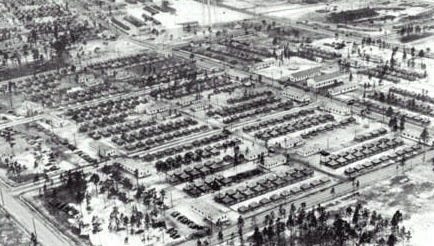
The camp is a Continuity of Government site for the governor and his executive branch (the Florida version of the White House Bunker). At the height of the war, Camp Blanding had the equivalent population of the fourth largest city in Florida (St. Petersburg with 60,000 residents), over 10,000 buildings, 125 miles of paved roads, and the largest hospital in the state of Florida.
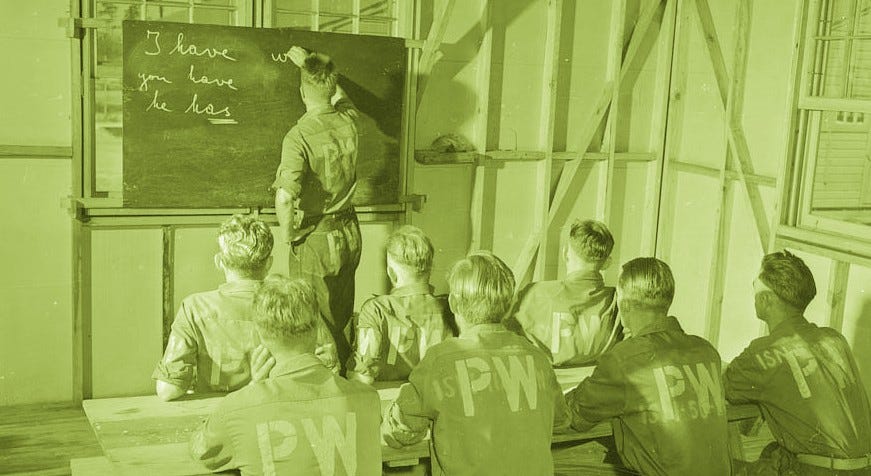
Camp Blanding also housed German prisoners of war. Being interred at the camp was apparently a reward for the imprisoned submariners that cooperated with their U.S. captors. It also housed 343 Japanese, German and Italian immigrant residents of the United States as an internment camp.
After the war ended, the camp was returned to the custody of the Florida National Guard.
Camp Blanding is now also home to a wonderful museum and airplane garden at the front gates. Check it out this summer!