


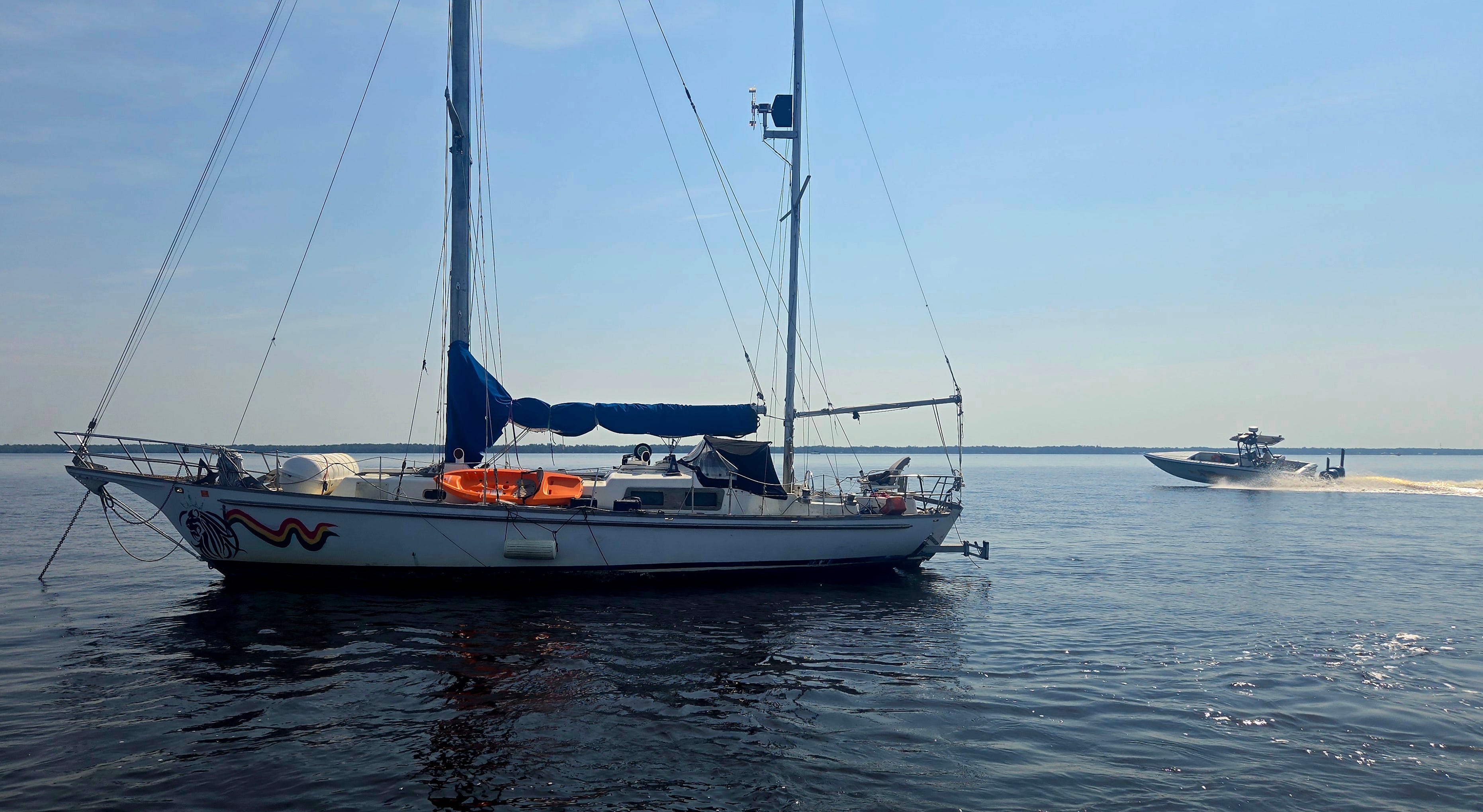
The latest statewide inititative to clear junk boats from Florida waters is taking hold, but more so in some places than others. For example, here in Green Cove Springs, where there are around 30 boats anchoring long-term, only three are in compliance. Most of the rest could be subject to a $100 fine.
A couple years ago, a state study found a correlation between the number of “long-term stored vessels” and the incidence of derelict vessels, which surprised absolutely no one.
The goal is always the same—fewer derelict boats in Florida waters. Historically, that meant applying multiple laws—layers of them—to enforce best practices among boat owners. The cops quickly found some of these solutions were too labor intensive and competed with other duties.
The best example of that is a law which allows water cops to monitor a sea-trial so an owner can prove a particular vessel is not derelict. In the U.S., it’s enough of a chore that we don’t even require a sea-trial for captain-license candidates, people trying to prove they can safely take passengers to sea.
In recent years, Florida began designating “Anchoring Limitation Areas,” which prohibited a boat from anchoring in these marked zones for more than 45 days in a six-month period. In Monroe County, boats must be moved at least a half mile away from any place it had been anchored for 90 days.
Counties with more than 1.5 million people—Miami-Dade, Palm Beach and Hillsborough—can restrict anchoring to 30 days in a given six-month period.
Fish & Wildlife officers—aka the “mullet sheriffs”—were given the power to designate vessels as being “at risk of becoming derelict,” triggering escalating enforcement punishments such as fines or the eventual confiscation of the boat in question.
Last year, Florida legislators enacted yet another law that applied to every waterway in the state. This marked a departure from most earlier anchoring limits. Rather than restrictions within a designated space, the law was a mandate based entirely on duration at anchor. The law went into effect on January 1.
Any boater anchored in one place for more than 14 days in a 30-day period is required to obtain a “Long Term Anchoring Permit” from Fish & Wildlife. The application process is online and costs nothing (though a cynic might add the word “yet”). The permit is valid for a year and must be renewed then or if the boat is moved more than a mile from its initial permited location.
The permit may be revoked if the vessel is a derelict vessel or at risk of becoming derelict as defined by state law or if it is in violation of marine toilet regs.
Failure to obtain a permit can result in a $100 fine for the first offense, $250 for the second and $500 for three or more offenses. A vessel that is the subject of three or more violations within a 24-month period and resulting in dispositions other than acquittal or dismissal must be declared a “public nuisance” and therefore subject to seizure by the state.
The idea behind the new law is to make easier for Fish & Wildlife to contact owners of anchored boats. Green Cove Springs Police Chief Shawn Hines, who was the city’s marine patrol officer before his promotion, said the city already knows owners of the ragtag fleet on its section of the St. Johns River.
“In preparation for each hurricane season over the past several years, we have conducted an inventory of vessels anchored within our jurisdiction and maintained contact information for vessel owners should emergency notifications become necessary,” Hines said.
According to Fish & Wildlife, 491 long-term anchoring permits had been issued as of June 11. Here is the breakdown by county, alphabetically:
Eight in Bay, 11 in Brevard, 2 in Broward, 35 in Charlotte, 3 in Citrus, 3 in Clay, 3 in Collier, 5 in Duval, 14 in Escambia, 1 in Franklin, 2 in Hendry, 9 in Hillsborough, 2 in Indian River, 1 in Lake, 9 in Lee, 7 in Manatee, 4 in Marion, 14 in Martin, 26 in Miami-Dade, 70 in Monroe, 2 in Nassau, 1 in Okaloosa, 151 in Palm Beach, 5 in Pasco, 53 in Pinellas, 3 in St. Johns, 8 in St. Lucie, 7 in Santa Rosa, 1 in Sarasota, 26 in Volusia and 2 in Wakula.
Palm Beach County, a major battlefield in Florida’s anchoring wars, had the most permits at 151.
Three Clay County boat owners interviewed for this story—all of whom have vessels anchored at Green Cove—were ignorant of the new requirement to obtain an anchoring permit. One of them conflated the new law with other anti-anchoring measures being enforced in Jacksonville waters 20 miles north.

There is likely a dynamic in play between various Florida jurisdictions. As you might expect, folks with boats that need to be stored at anchor are likely to migrate from high-enforcement jurisdictions to less strict places such as Clay County. (The county’s marine patrol deputy did not reply to an email inquiry.)
Chief Hines, meanwhile, said that the City of Green Cove Springs will get around to enforcing the law eventually:
Like any enforcement initiative, implementation will be based on available resources, staffing levels and operational priorities. This is a project that the department plans to undertake, but will be initiated when resources and competing priorities allow for effective and consistent enforcement.
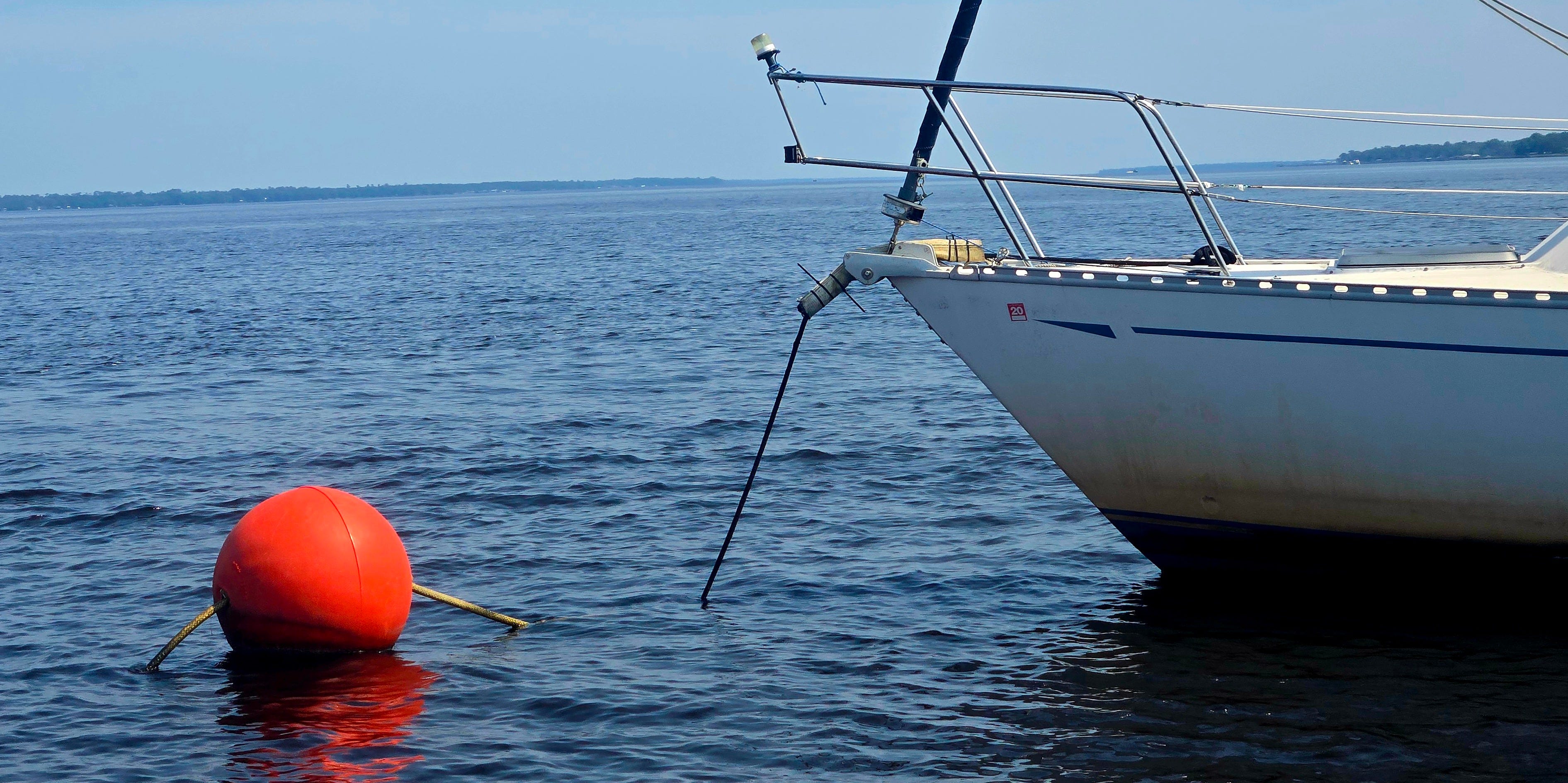
Portrait of an Anchorage, Green Cove Springs
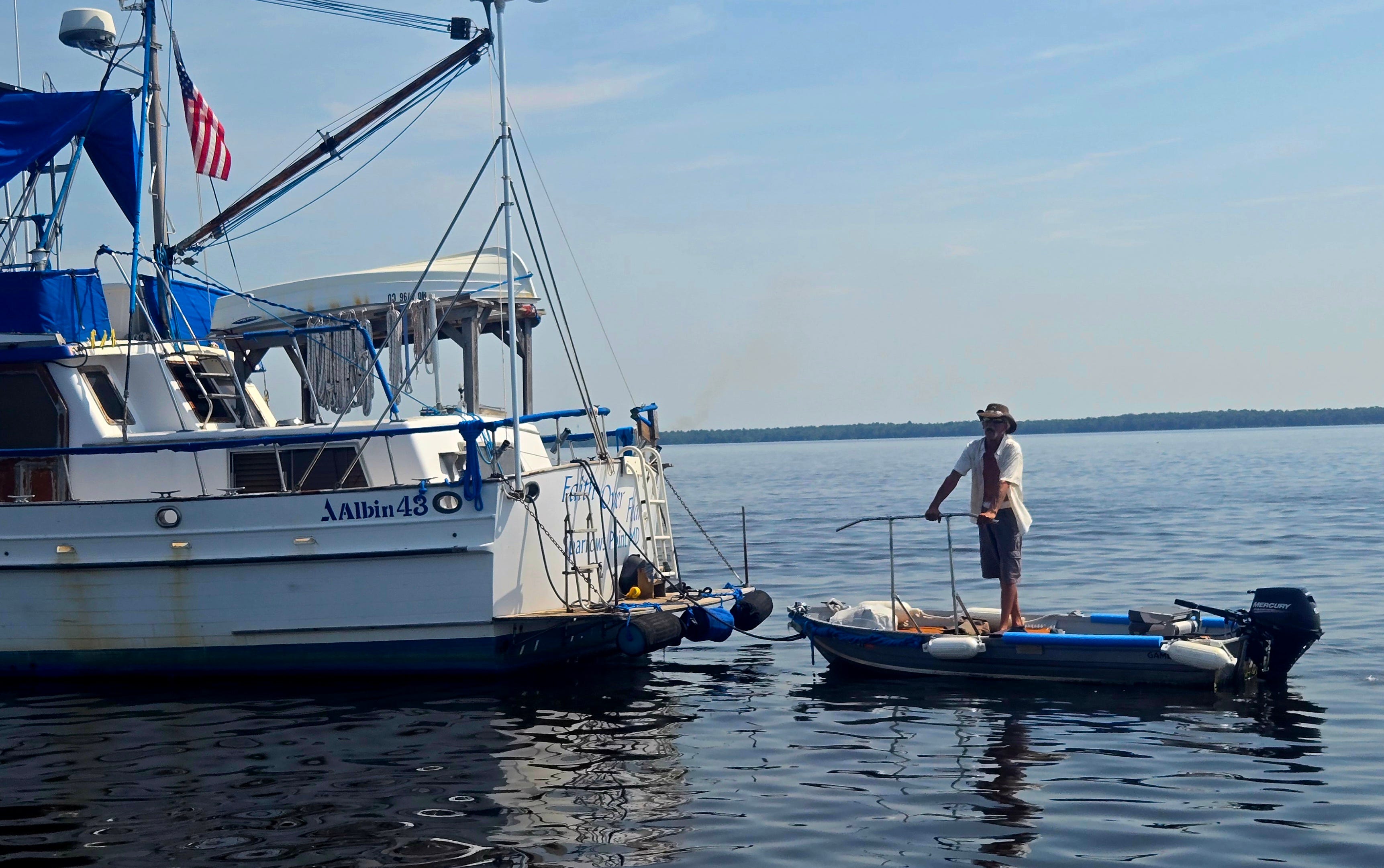
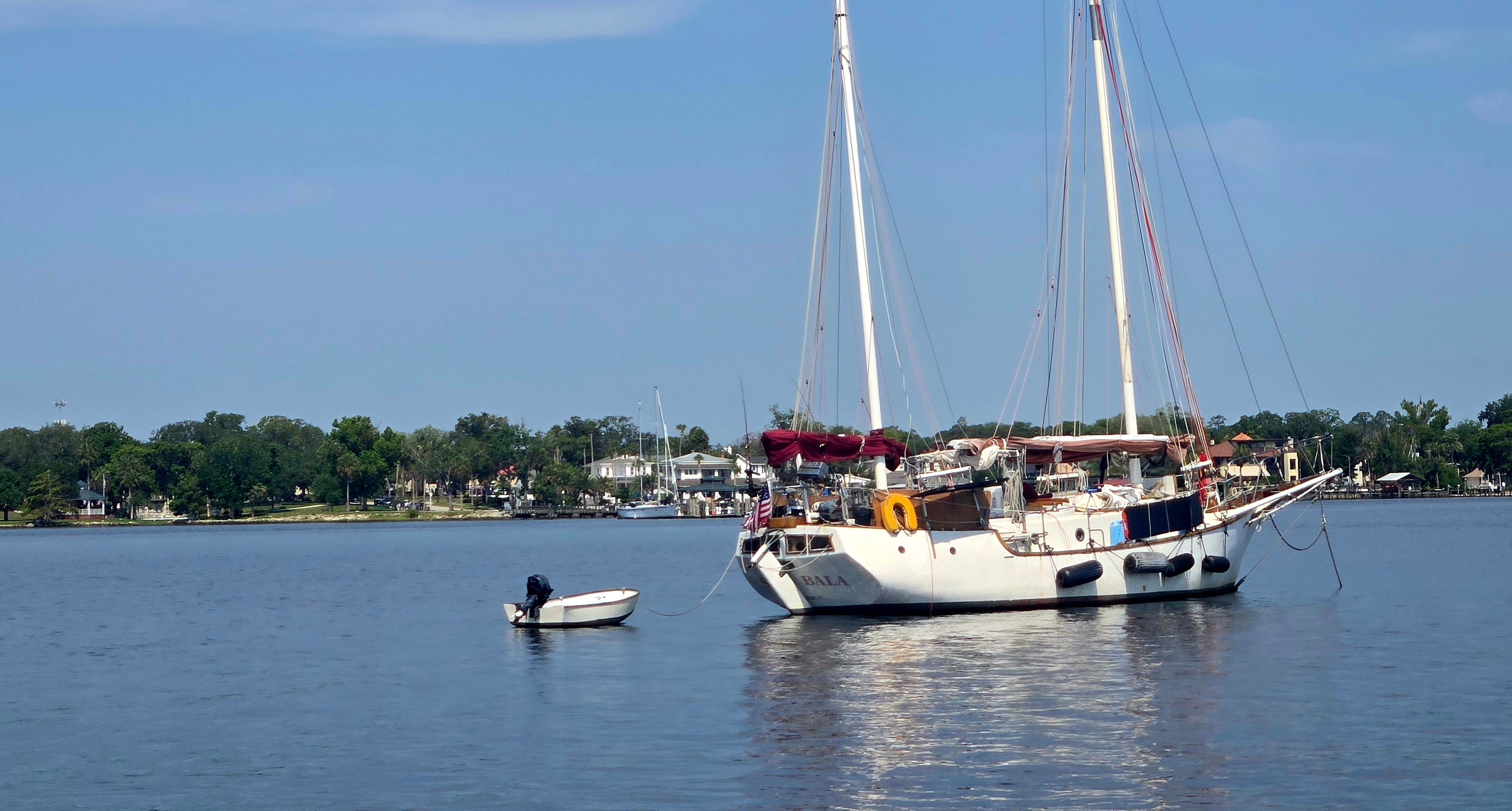
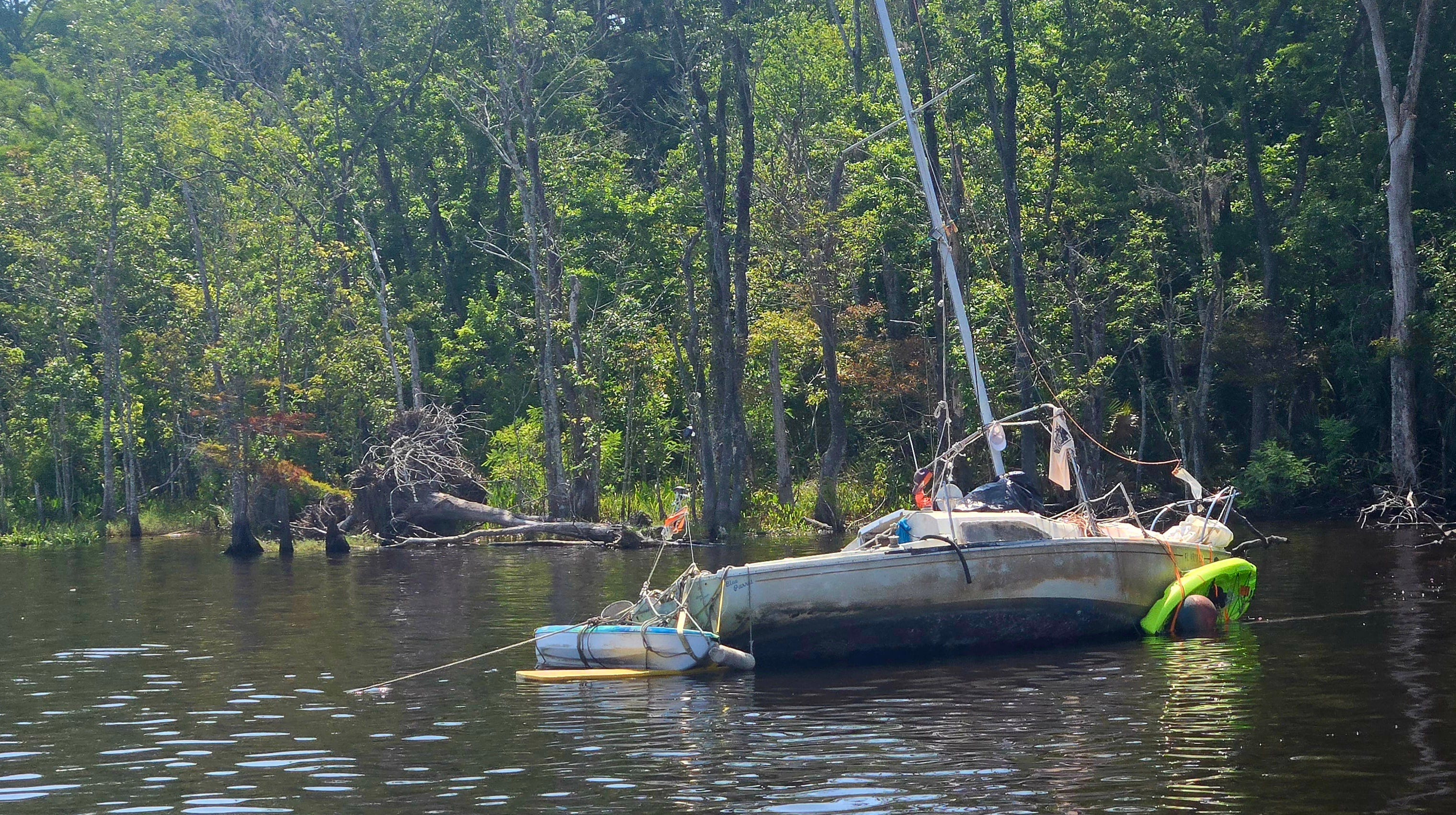
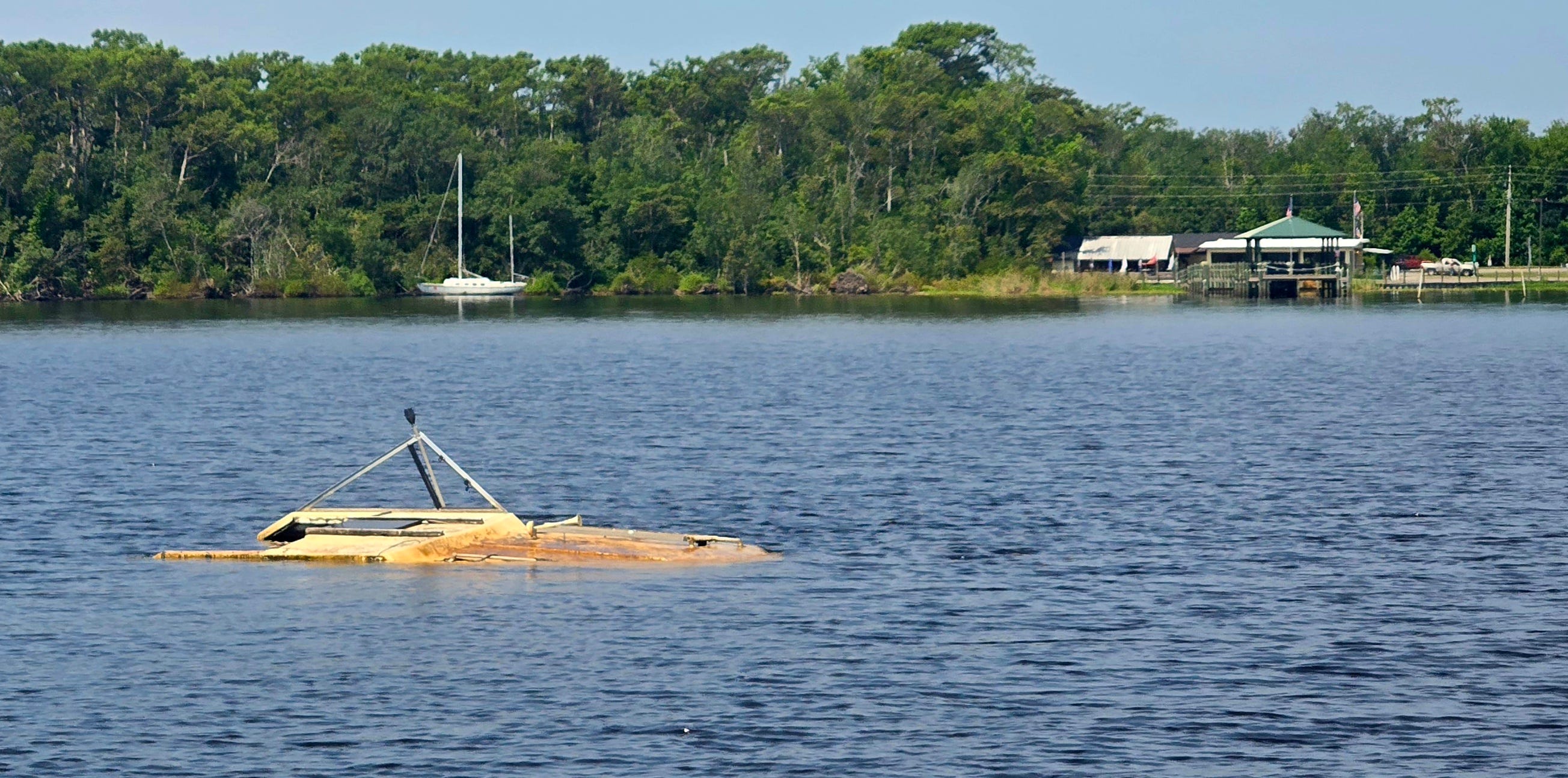
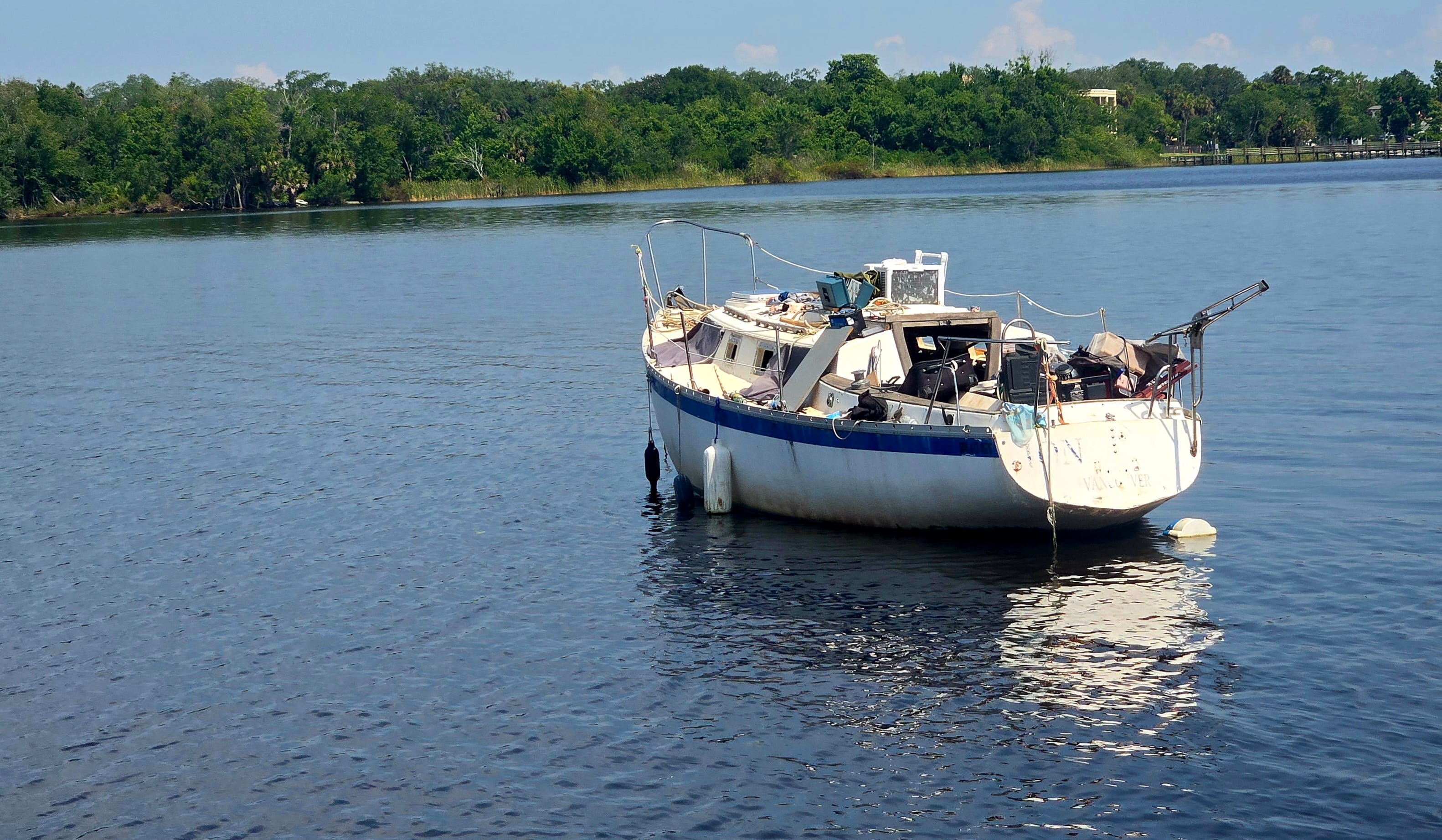
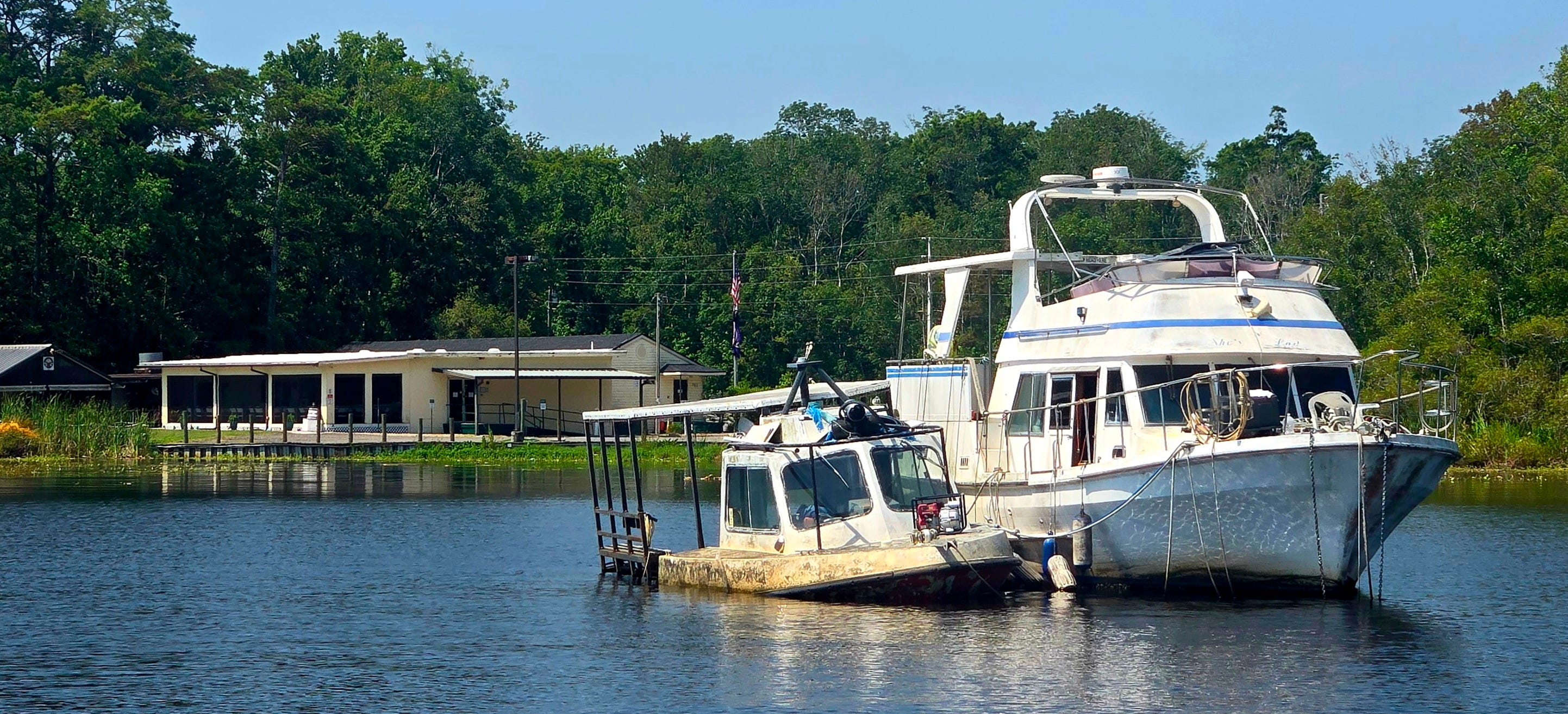
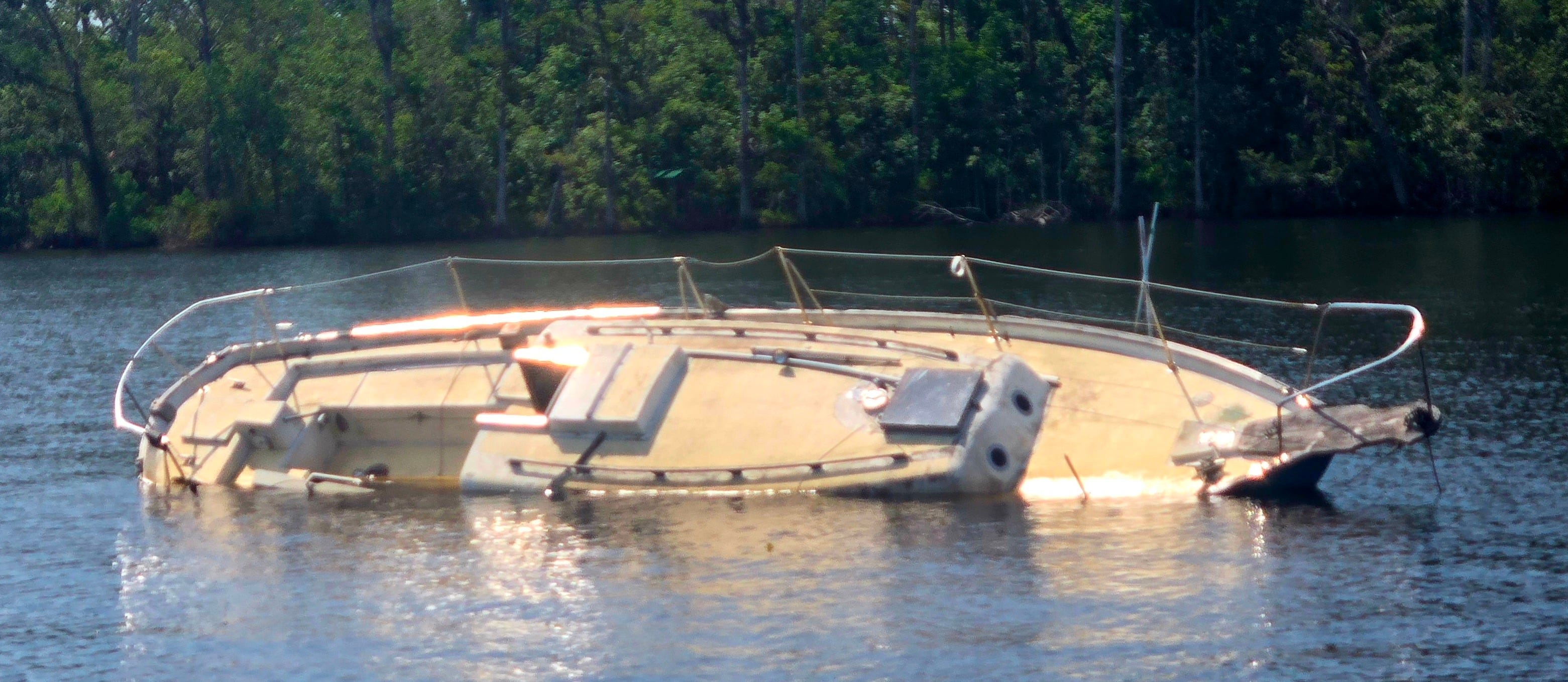
Interestingly enough, there were three boats at Green Cove that appear to have been secured to moorings. As a practical matter, this is perfectly sensible because it allows for a much heavier anchor, but for these semi-permanent fixtures to be legal in Florida requires a different, difficult to obtain permit from the state.
In March, Palm Beach Police charged a man operating an unapproved mooring rental service with a single count of Dumping of Litter “in an amount exceeding 500 pounds.” The litter in question was the anchor weight and chain for a mooring, also known as “mooring tackle.” The crime is a third-degree felony, which can put someone in prison for up to five years.
Derelict-boat numbers, according to Fish & Wildlife:
The average cost to remove a derelict vessel from waters of the state is $750 per foot.
The average length of derelict vessels removed is 32 feet.
In 2020, the total cost of derelict vessel removal was almost $2 million. That increased to almost $5 million in 2021, to approximately $6 million in 2022, to approximately $7 million in 2023, and almost $13 million in 2024.
691 popular overnight anchoring locations have been identified in Florida.
Of these unmanaged anchoring areas, 319 were used primarily for long-term storage, 243 were used primarily by transient cruising vessels for short overnight stays, and 129 were used for an indeterminate mixture of storage and cruising.
Thanks for writing this article. Very well written and informative