


The Clay County School Board can’t seem to go a single meeting without at least one controversial idea. Near the beginning of their workshop on February 24th, Board Member Beth Clark asked the Board and the School District to consider adding traffic cameras in school zones to “generate revenue” via speeding tickets.
Clark mentioned that the Red Light cameras in Orange Park are generating over $1 million in revenue per year. She also said they don’t change driver behaviors, admitting out loud what everyone knows: the cameras are simply a cash grab with little to no safety benefits.
It was not clear from the discussion if any other board members agreed, and the discussion quickly moved on to more pressing items. But in a time when people are beginning to rebel against the ever-growing surveillance camera network across the country, the idea is likely to come across as tone-deaf at best.

Here’s a summary of the rest of the meeting:
Major Actions Taken
Student Representation: Staff will prepare guidelines so that a different student (from each high school in turn) addresses the board monthly. The student would have a designated seat, and the program would be tied to civics education. The final policy draft will be returned at a future meeting for approval.
Start-Time Engagement: Staff summarized House Bill 733: by July 2026, middle schools must start no earlier than 8:00 a.m. and high schools no earlier than 8:30 a.m., or school districts must apply for a waiver from the state legislature. The board agreed to survey the community in early March about potential schedule changes and to report the results at the March workshop. Any waiver application must be filed by June 1.
Other Updates: Staff said a new online system for booster-club fundraising is nearly ready, and work is underway to split the student conduct code into separate elementary and secondary handbooks. These were informational items; no action was taken.
Key Discussions and Debates
Student Speakers: The idea was uncontroversial. Members discussed how to pick and rotate students, the agenda slot (proposed before public comment), and how to connect it to classwork.
One member said granting a special seat would make students feel included. The consensus was that student input will be an added agenda item, not a replacement for public comment.
School Start Times: Staff outlined each schedule option under the state law. Board members weighed pros and cons. Pushing elementary start times earlier would mean many young children waiting for buses before sunrise, raising safety and childcare concerns.
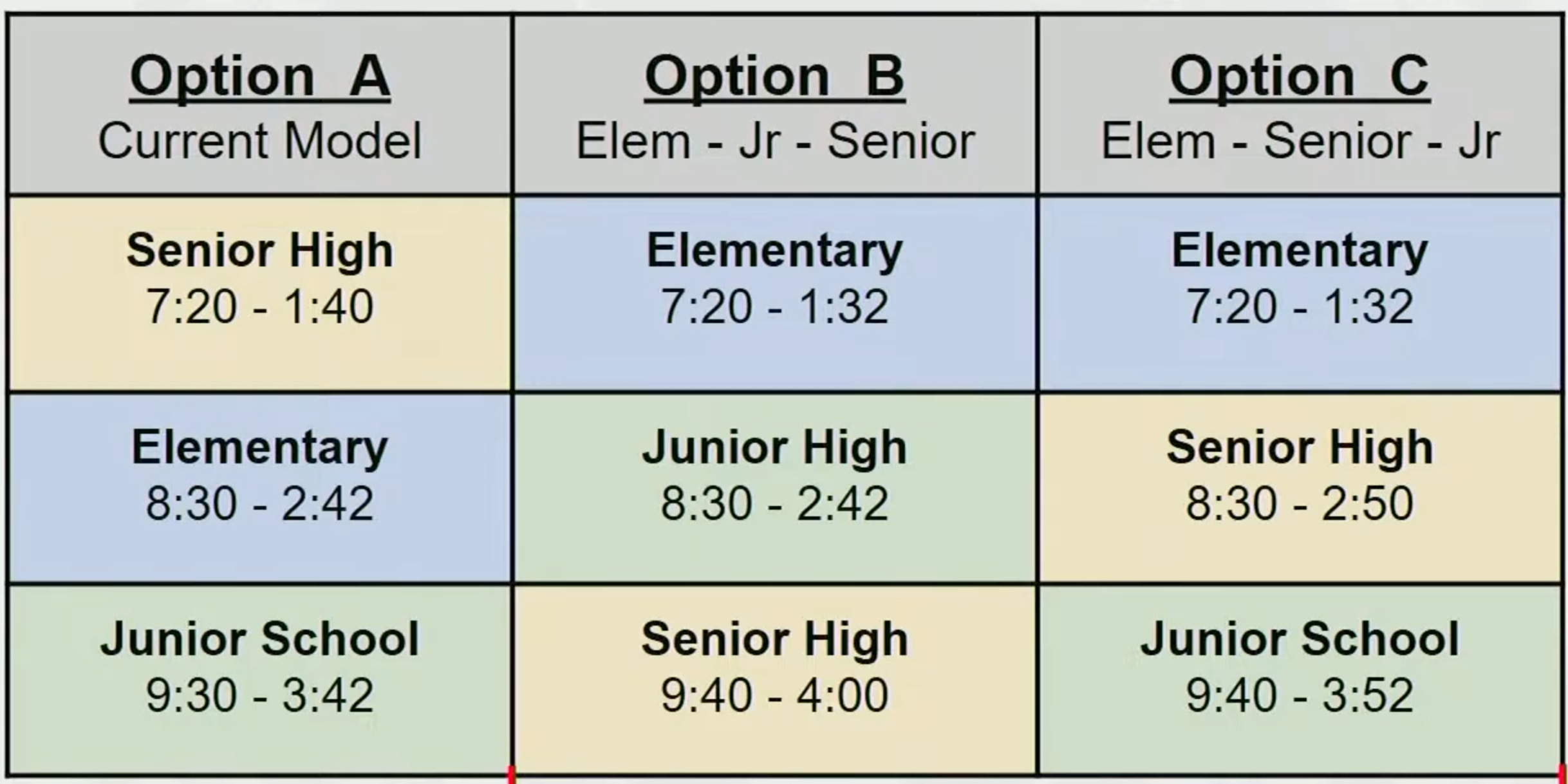
Conversely, moving high schools later could improve teen sleep but delay after-school activities. Logistics dominated the conversation: staff noted that Clay’s three-tier bus system would require dozens more routes if the tiers changed, at a cost of roughly $1.9 million annually, according to one estimate.
Budget Updates: Broskie described the “Financial Renaissance” plan to address a roughly $20 million shortfall stemming from enrollment declines and rising expenses. The district paused non-essential travel, repositioned 252 positions, and trimmed costs in utilities and substitutes.
“There’s not a day that I don’t discuss the budget with somebody,” Broskie noted, praising staff efforts. He highlighted placing the one-mill property tax renewal on the November ballot to fund school resource officers and competitive salaries.
“We should continue to provide safety... and compete for the best and brightest,” he said, noting board consensus. Broskie drew a sharp distinction between school choice and vouchers using a hypothetical sheriff’s office analogy to argue that diverting public funds to private entities reduces services.
Broskie cited an auditor general report of $300 million in voucher fraud as particularly concerning.
Next Steps
The district will distribute the March 2–13 survey and present the results at the next workshop.
Based on feedback, the board will decide whether to seek a waiver (by June 1) or adjust the schedule.
The student-representative policy will be finalized at a future meeting.
No formal changes will occur until these steps are complete; both issues will return for a formal vote in the spring.
When did the county school district decide to start a flow of funds from traffic issues? Maybe the state should revisit the pay scales, taxes, parental donations and school fundraisers? This sounds very sketchy and not appropriate. Thinking outside the box is admirable but some ideas are just dumb. Who’s going to oversee the disbursement of fines?
I'm bewildered as to why Clay County continues to sit there with their hands stretched out constantly asking for money. My daughter's high school is already charging a ton of money for sports fees, school supplies, and uniforms. This is on top of the county upping the property tax millage rate to get around Florida's property tax home annual valuation increase restrictions as well as the sales tax increase implemented a few years ago that was supposed to fund our schools.
It sounds what Clay County really needs is an independent audit to find out where our taxpayer money is going. I have a feeling that the board of commissioners are the reason the schools don't have money as they fritter away our money on unnecessary expenses and continually find ways to give themselves pay raises.