

This story is by the folks at the Clay County Archives Center.
Nestled alongside Penney Farms lies the tiny, historic community of New Hope. Before the Great Depression, this community was where skilled black workers were first recruited by Florida Farms & Industries to build a cannery and cattle facilites and to plant myriad crops. There was a dairy farm, too.
Florida Farms & Industries, or FF&I, was the precursor to Penny Farms, so New Hope existed before Penney Farms.
The workers originally lived in quarters made from converted boxcars until modest homes could be built, and they sharecropped to suplement their wages. Sharecropping was a vestige of Jim Crow that applied to poor white and black people, and FF&I had more than 100,000 acres of land to “share” with its employees.
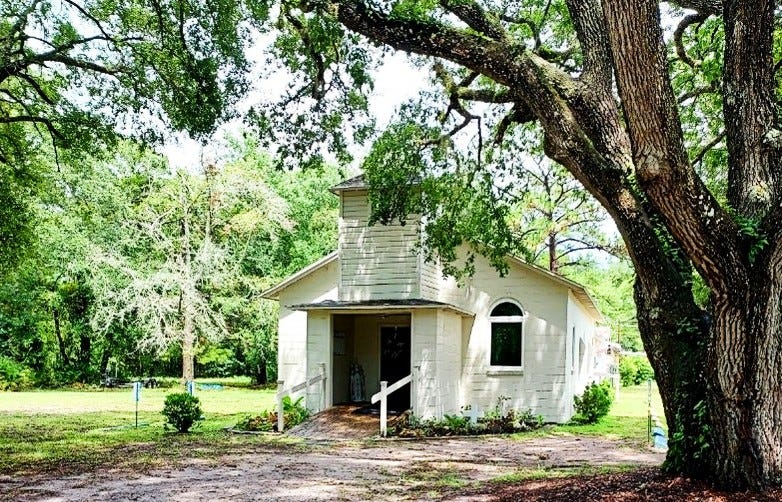
When J.C. Penney took over FF&I operations in the 1920s, the community built a church and renamed themselves New Hope to signify both the coming together of the community and its hopes for the future. The church was named New Hope Baptist Church. There was also no more sharecropping, as J.C. Penney sold the workers land and allowed the debt to be paid off over time.
The church was a place where fellowship, Sunday school, and prayer meetings were held, and visiting pastors from other churches came to give the occasional sermon.
The church was the heartbeat of the tiny community, which was just 190 acres of tree-lined roadways and heavily shaded homes. Tragically, in 1933, the church burned down. The small community rebuilt the church and members of the Penney Retirement Commuinity helped. The church house is still there today and is in use by the community.
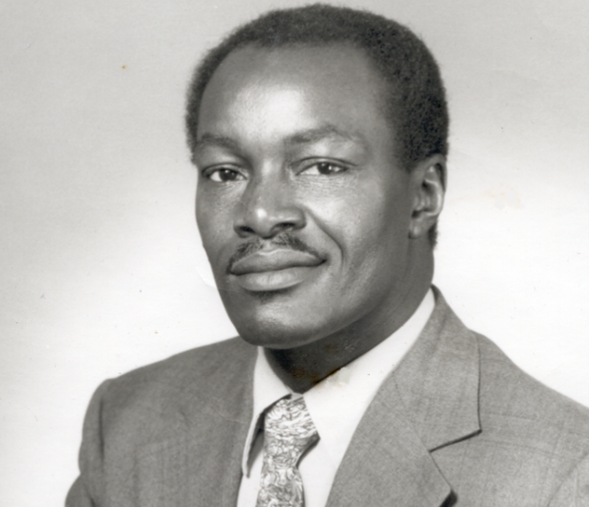
Back in its heyday, in the 1940s and times thereafter, the church had some wonderful pastors. The most well-known were Jerry Haymon and his son, John Haymon. They alo worked in a blacksmith shop in Penney Farms. In the 1940s and 50s, Penney Farms was an active agricultural center with large dairy farms, such as Shadowlawn, Bordenville and Foremost.
John Haymon was born in 1933. He also pastored the church, dabbled in local politics, and worked at Penny Retirement Community. John raised his family in New Hope during the 1960s and 70s. His children were active in the church and grew up to be pastors, business owners, an opera singer, a nuclear engineeer, a nurse, a Marine Corps veteran, and a counselor. All in some way gave back to their communities through lives of service.
The 1970s brought improvements to the community. Reverend John Haymon and his wife, Mamie Burroughs Haymon, spearheaded the neighborhood center and paved roads. Groups from Penney Retirement Community visited New Hope Church to hear Reverend Haymon preach. The topic of one of his sermons was “You Must Build a Bridge”. Building bridges between the two communities was a regular focus of conversation.
John’s most famous child was Cynthia Haymon, a Grammy Award winning opera singer. Her most well known opera was Porgy and Bess.
John Haymon passed in January of 1985, leaving behind the community of New Hope to mourn his passing.
This information was sourced from the Florida Times Union, newspapers.com, Clay County Crescent, UF Digital Newspaper Collection, Ancestry.com, and in subject files and court records maintained locally at the Archives Center.
For more information about this topic or about anything related to Clay County history, please contact Clay County Clerk of Court’s Historical Archives Division personnel at (904) 371-0027 or by email at clayarchives@clayclerk.com. The Archives Center is part of the Old Jail at the county’s Historic Triangle (21 Gratio Place, Green Cove Springs, 32043) and is open Monday-Friday, 8am-5pm, minus holidays. Stop by to take a self-guided tour of the Old Jail or for research assistance from staff.
Your articles bring to light so much history educating me to the things I try to piece together as I walk, bike and move about our town. Thank you so much