


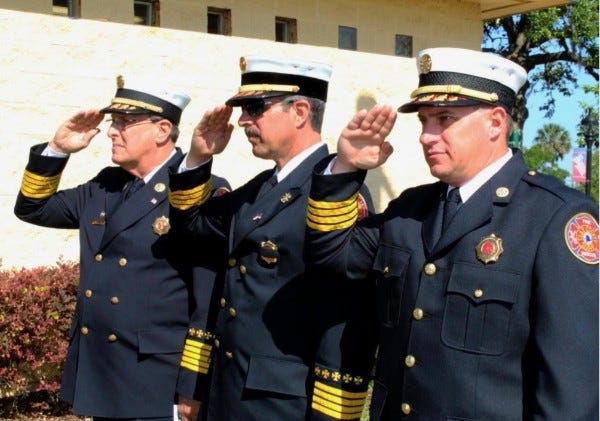
The second of two parts on the travails at Clay County Fire & Rescue.
Part two of this story is a behind-the-scenes look at Clay County Fire Rescue. It’s told through the rescue crews’ own words in surveys with their raw unfiltered comments—revealing what’s happening behind the sirens—a workforce pushed to the edge by crushing call loads, trauma, and an administration that has treated rescuers with a steady mix of neglect and indifference.
To reveal how the county’s fire rescue got where it is today, we have to go back to the 1980’s, when big hair was in style and, in some parts of our county government, common sense apparently wasn’t.
Back then, the county was mostly run by folks who had gone to Clay High School in Green Cove Springs—or hunted and fished with people who went to Clay High School or married into the families of those who went to Clay High School.
PART I

With the county’s population rising faster than storm waters in Black Creek, Clay High-ers got together on somebody’s back porch and wisely decided they needed more people to put out the fires in the growing county.
Folks were plucked from the CH’s entourage to run the new department, sleeping quarters were quickly schlepped on the back of the old volunteer fire stations, volunteers became paid, others were hired and the Clay County Fire Department was created. Emergency Medical Services (EMS) joined the fire department in 1994, but rescuers from back then said not a lot changed over the years—crews were sent out with gear and equipment that could barely get their hazardous jobs done.
From the beginning and throughout the years, the department has been like a ship on fire with captains and crew abandoning it faster than anyone could steady the helm. Those left standing rose quickly through the ranks to well-paid upper management—some through merit, some because they simply clung tightly to the rails—waiting for their turn at the wheel.
Surveys, conversations, old letters and reports point to one thing: some of those steering Clay County Fire Rescue are the same ones that keep running it aground.
Surveying the Problem
More firefighters and EMS die by suicide than from job-related injuries.
While all first responders confront staggering physical and mental challenges, national studies show fire and rescue personnel face the most psychological risks. Trained to save others at the expense of their own well‑being, they experience higher rates of depression, anxiety, PTSD, and suicidal thoughts than the general population. This is a stark reminder that the greatest dangers they face aren’t always the ones they run toward, but the ones they carry home.
The reported risks at the top of the list are continuous emotional traumas, especially with children, and understaffing which results in overwhelming call volumes and chronic sleep disruptions with no time to process the ordeals in-between. Surprisingly, sharing first place for mental stress is “organizational stress from poor leadership and lack of support.”
Florida, along with many other states, has passed legislation to help rescuers deal with the traumas of their dangerous and difficult jobs. The bills have strengthened privacy regulations and also encouraged county and local governments to start free peer-counseling programs. Peer‑counseling uses trusted members of the fire and rescue crew who receive mental‑health training and are available to talk with colleagues about traumatic calls or other stress. They also do surveys to determine major stress factors and help to lessen them.
Clay County was slow to get their peer counseling started, so an outside source conducted two confidential mental health surveys within Clay County Fire Rescue ranks to identify potential peer counselors and determine the stresses Clay’s team was experiencing.
With legislative encouragement and the help of a local mental health group, Clay County finally created a peer-counseling program. As part of the program, a Mental Health and Leadership survey was conducted and released in October 2025
There are roughly 300 Fire & Rescue members in the county. Some said they worried about the confidentiality of the surveys, so approximately 167 responded.
Judging from all the surveys, Clay’s fire and rescue’s leadership has been outdoing itself in the poor‑leadership‑and‑no‑support department. The results were brutal. They didn’t just signal trouble, they exposed an administration running on denial and duct tape.
According to county insiders, some upper management dismissed the surveys as “random whining.” But the huge number of comments were thoughtful, detailed, logical and grounded in practical knowledge and advice about how their department could be made safer and more effective for the county and themselves.
Clay’s fire and rescuers won’t discuss their heroism, but reading and hearing about it was impressive and inspiring. However, reading the surveys regarding the challenges they’ve faced and incidents that have happened behind the scene was different—sad, frustrating, maddening and in some cases so alarming that CN&V chose not to publish them so folks could sleep easier.
When survey questions asked Clay’s crews to identify the mental stresses in their job, they cited traumatic rescues, “nonsense calls,” repeated overdose responses, transport requests from nursing homes unwilling to simply wait for private services, financial strain and poor station conditions. Their answers also echoed national studies—poor leadership decisions shared first place.
Fire crews spoke well of most of their battalion chiefs, mid-to-upper‑level officers who oversee multiple fire stations and crews in certain areas of the county. They are the link between station‑level leadership and the top administrative command.
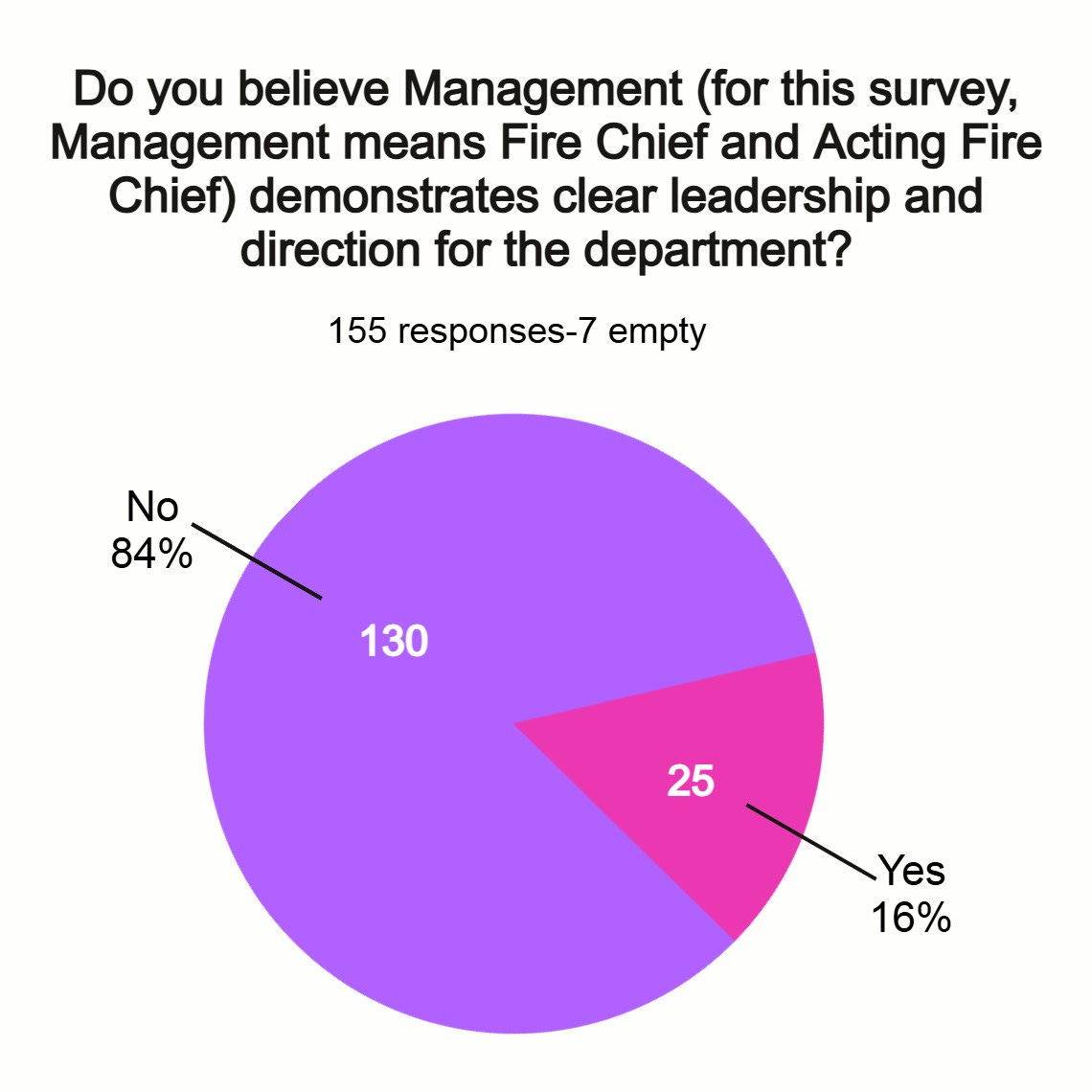
Both surveys included questions about management. The county’s 2025 survey asked whether Fire Chief/Deputy County Manager Lorin Mock and Acting Fire Chief/Assistant County Manager David Motes showed clear leadership—84 percent said no.
The same number said management doesn’t follow through on projects or commitments once they’re announced. Eighty‑eight percent said leadership doesn’t take input from the ranks when making operational or policy decisions, and 89 percent said discipline and accountability were not applied fairly.
In Nov. 2025, Clay News & Views asked to interview both Fire Chief Mock and Acting Fire Chief Motes to get their response to the surveys. The director of communications responded in an email, saying, “Chief Mock will speak on behalf of Clay County Fire Rescue.”
Complaints in all surveys against Motes and Deputy Chief Jason Boree didn’t just pile up—they poured in—and could fill volumes. Responses assigned 50 percent of all stresses to decisions they made and those left to chance.
The survey comments many times had reccurring negative themes. They called Motes and Boree “walking failures” and said they “lacked leadership,” created a hostile work environment, were “bullies,” unfairly targeted employees they did not like and made exceptions after risky mistakes for those they did, had poor planning skills and were so removed from the actual work of fire rescue their incompetence and disregard was impressive.
Respondents didn’t offer judgements without many examples.
They said Motes and Boree allowed people to order trucks and other equipment that had no knowledge of either—resulting in inferior equipment that made it difficult for crews to properly respond to emergencies.
Because of the county’s population growth and overwhelming calls, the county plans to hire more personnel, but they have no place to put the new-hires. Survey respondents said Motes and Boree “came up with a grand plan” to add bunk beds to stations that were already at or over-capacity. They said stations 13 in Clay Hill and 15 in Lake Asbury were not even zoned to be occupied 24 hours a day and still had mold and air quality issues.
They wondered if the commissioners or county manager knew their leadership was afoul of zoning, fire and building regulations or that they were operating under an “administrative tolerance” rule—which means those in charge can do whatever they want.
All health directives require crews to be moved out of stations during mold and mildew remediation because of dangerous air quality. Respondents wrote that while station 13 was under construction for mold and structural issues, the crews were not removed and had to sleep amidst the swirling contaminants and eat in the truck bay that was full of exhaust fumes.
Mock’s salary is $213,778 and Motes’, with his promotion, is $186,286. They are two of the highest paid fire personnel in the state.
Surveys carried reports of when a favored employee of the two manipulated the Telestaff scheduling system within fire and rescue to obtain overtime work and caused others to lose overtime opportunities. When it was called to management’s attention, an investigation was alleged, but there were no consequences.
Others wrote that a female employee, a close personal friend of Boree’s, was promoted despite lack of qualifications. They alleged her inexperience and poor judgement had contributed to the death of a teenager, yet she was never disciplined.
Surveyors said Boree had a “short fuse” and his method of communication was “yelling” and “cursing” at crews. There were plenty of accounts to choose from. One said he angrily targeted a crew member because he took military leave. And the ongoing joke is “He can’t fire all of us…but he’ll sure try.”
To balance the scale of complaints, CN&V searched for positive feedback about Motes and Boree—but it was like searching for a five-star review of gas station sushi.
Crews gave CN&V specific details of serious official complaints they had filed against the two, but nothing was done.
Logistically Lacking
Deputy Fire Chief Charles LeRoy and Fire Chief Mock also didn’t fare well in the surveys—which surprised no one.
Readers who depend on their county EMS routinely, may want to skip over survey accounts of LeRoy’s leadership.
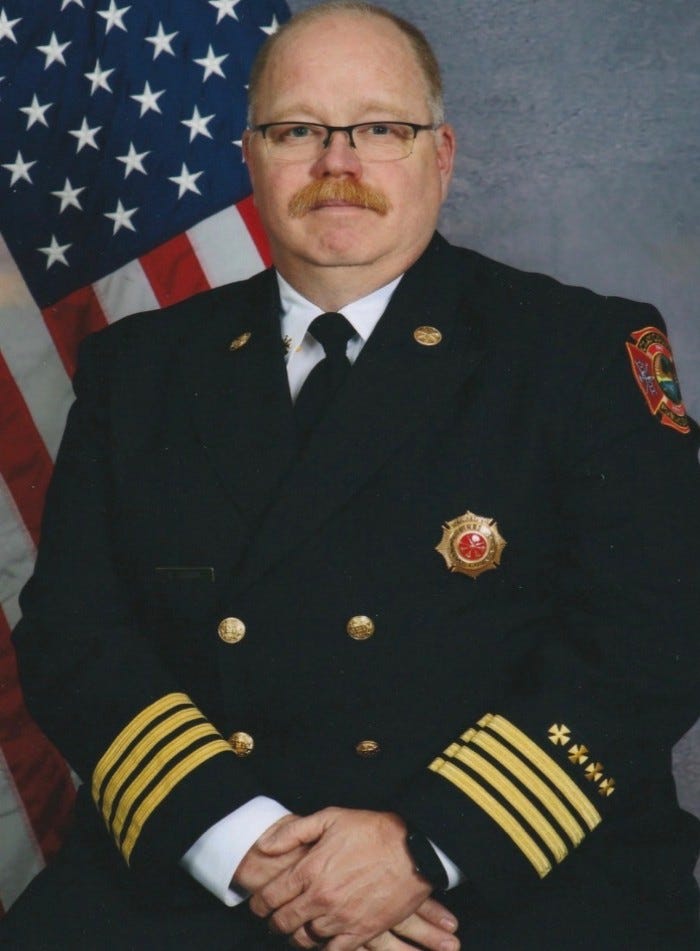
Crews say Chief LeRoy is responsible for logistics—ordering and distributing medical supplies, protective gear, unforms, tools, radios and overseeing maintenance and repairs of vehicles.
Survey responses described LeRoy as “overwhelmed and/or clueless,” and said upper management was exceedingly aware of his repeated failures which were described at length.
Seventy percent of all firefighter line-of-duty deaths are cancer related as they are constantly exposed to “carcinogenic cocktails.” These are not only from fires and chemical spills but diesel exhausts. Other cancer-causing agents also cling to crews long after the emergencies are over and spread to clothing, recliners, kitchens, and bunk rooms at the stations. Rescuers can be hosts to bring the toxins to their personal vehicles, homes, families and other places.
LeRoy has been on the job 29 years, crews said, and should understand the daily dangers of insufficient protective gear that leads to cancer risks. Yet, he repeatedly prioritizes costs over safety when ordering.
Some crew members wrote they have been waiting six years for LeRoy to order second sets of gear, while upper management has sets they never use.
Crews said LeRoy has consistently told medical crews there is a “nationwide shortage” of medical supplies since COVID. Some personnel are married to nurses and other medical professionals who assure this is false. EMS said when they overlap with emergency crew in neighboring counties, they always have ample supplies.
“We have to beg for supplies from hospitals so we can give proper treatment to the community. If we don’t have a medication or items to perform on scene and the patient has a bad outcome, the first person to blame will be the guys on the street.” wrote a respondent.
“How are we supposed to do our jobs without the essential equipment?” asked another.
The Abandonment
Fire Rescuers said Chief Mock had essentially “abandoned” fire and rescue leaving Motes and Boree to run operations with a management style that resembles unsupervised teenagers.
In a January 15 interview, Mock disagreed with the abandonment contention.
He said in December 2018, when County Manager Stephanie Kopelouses took a state-appointed position, he was appointed as county manager for the six-month search for a permanent manager. He moved to the county’s administration building and doned civilian clothes and Motes was appointed Acting Fire Chief.
Mock said when Howard Wanamaker was hired in June 2019, he asked Mock to remain as Deputy County Manager. Mock now splits his time between the two county offices.
In a move that surprised many inside and outside the administration, the new county manager directed a countywide operational “restructuring.” In addition to Mock, Wanamaker hired four more assistant county managers. Acting Fire Chief David Motes kept his acting job and was also named an Assistant County Manager.
Mock’s salary is $213,778 and Motes’, with his promotion, is $186,286. They are two of the highest paid fire personnel in the state.
Mock said he feels his relationship with Wanamaker has provided benefits for Fire Rescue. He said the fire department was seeing a “serious turnover” before and after he was hired in 2009. In 2020, he said he was able to provide some “budgetarily benefits,” namely raises, through collective bargaining with the union for fire department.
Fire Rescue disagreed. They said as both Mock and Motes bargain for the county against the fire crews, the union was responsible for the raises and other safety measures they acquired.
Mock was optimistic. He said the county would be adding new stations, more crew members and said only about 10 fire-rescue members left last year, compared to previous years when crews were “bailing.” He feels the surveys are an “opportunity” for the county to recognize issues in fire-rescue and make them better. Maybe he’ll start visiting fire stations, he said.
Despite Mock’s optimism, it appears the county has settled on a new strategy. Instead of admitting there are serious issues in the fire department which need addressing and resolving, the County appears to be choosing the lipstick on the pig approach. They’ve put their communications team to work turning out sunshine‑and‑confetti postings, cutesy videos and brightly colored alerts to try to convince county folks that the house isn’t actually on fire.
But despite the administration’s unrestrained amount of cosmetic remediation—their pig still looks like a pig.
Changing of the Chiefs
Surveys responses, personal statements, input from a state oversight official who works closely with Fire Rescue, and accounts from former and present county insiders all point to the same conclusion. To make Fire Rescue more efficient and effective for the people of the county and for those who save their lives, the solution is to “remove chiefs 1, 2, 3, and 4.”
Mock said he planned to retire, but said the county manager asked him to stay through the summer.
Motes, Boree and LeRoy have long been at the helm of Fire Rescue and are also eligible to retire.
Motes has been in the fire department for 39 years. Crews say they believe he has mostly already retired, but nobody knows it, not even the county. They said fire chiefs’ cars are supposed to be on departmental tracking systems which allows the fire department to know where they are in case of emergencies, yet Motes usually has his disconnected.
LeRoy has been in fire rescue for 29 years. Crews hope he’ll soon recognize his efforts are typically not beneficial and head on home.
Boree’s tenure is 26 years. Those in fire-rescue believe he’ll only leave unconscious on a stretcher.
Rescuing Morale
A few new-hires are excited to begin their adventure. Some are bewildered and looking for an exit. But the overall morale at Clay’s Fire Rescue is “below sea level.”
The union has been mediating for a rescue officer. He fought two battles with cancer while on the job. To alleviate his constant pain, he was taking prescription marijuana while off duty. It showed up in a drug test and the department fired him. Despite mediation, the county recently stood by their decision. Crews say the termination is typical of the support they receive from their management.
One survey comment seems to express the feeling of a lot of rescuers.
“I love firefighting, I love helping people but this specific county leaders/Chiefs make this job miserable. I think most of us started out wanting to be here and now most of us hate having to show up.”

Florida is experiencing its most severe drought in 26 years. While neighboring counties have issued full burn bans, Clay issued only a “warning.” County insiders say the county’s reluctance to implement a ban is not tied to public safety but to financial considerations: a burn barn would allow county residents to dispose of debris at the Rosemary Hill dump site for free, resulting in a loss of revenue for the county.
Fires around the parched county have recently added even more weight to the overwhelming load the fire crews already carry. Even with the increased work, upper management and, it appears, the county manager continues to task their Communications Department to sell sunshine in a hailstorm on their social media pages.
Crews say their only hope is that county commissioners will finally realize what is happening in Fire and Rescue and step up to help.
The alarms are blaring, the smoke’s rolling, and sooner or later—leadership won’t be able to hide behind the haze.
It is a shame that a county would pay their firefighters and EMTs starting pay the same as their park and grounds keepers that require only the knowledge is how to operate a lawnmower and a rake. Where as our firefighters require extensive training and state board testing. And here we have a fire chief making over 200k we as clay county residents should be applauded at this and make our county commissioners held accountable for this
"First, thank you to Susan Armstrong and Clay News & Views for giving voice to what many have carried quietly for too long. The surveys, the stories of moldy stations, supply shortages, favoritism, and the crushing weight of organizational stress aren't just complaints—they're cries from people who run toward danger every shift, yet feel abandoned by their own command structure. As someone outside the department but familiar with the toll first-responder life takes (trauma, sleep deprivation, moral injury, and the unique pain of feeling unsupported by leadership), I read this with grief, not glee.
To Chiefs Mock, Motes, Boree, LeRoy, and the broader leadership team: This isn't about destroying reputations or celebrating a 'gotcha' moment. It's an opportunity—if received with humility—to see clearly what the people you've been called to lead are experiencing. The numbers are stark (84% lacking confidence in clear leadership, widespread feelings of unfairness and hostility), but even more telling are the human details: crews sleeping in contaminated air, begging hospitals for basics, watching favorites skate while others face harsh consequences. These erode trust like acid.
My prayer is that you would each take time—privately and honestly—to examine your hearts. Not defensively ('but we've done X good things'), but openly: Where have decisions, even unintentional ones, contributed to a culture where crews feel bullied, overlooked, or unsafe? Repentance isn't weakness; it's strength. It looks like acknowledging harm (even systemic harm), seeking forgiveness from those wounded, and committing to concrete change—not just PR spins or more 'sunshine' posts, but real actions: prioritizing safety gear and station remediation, ensuring fair discipline, listening without retaliation, expanding mental health support, and perhaps stepping aside if staying perpetuates the divide.
The crews deserve leaders who model the same courage they show on calls. Restoration starts when those in authority say, 'We hear you. We own our part. We're turning toward healing.' That one step could begin dismantling the wall brick by brick.
To the firefighters and EMS personnel still showing up despite the pain: Your service matters immensely. You're not alone in this frustration, and your integrity in continuing to protect the community while calling for better is heroic.
May truth lead to transformation, not just exposure. Praying for softened hearts, renewed trust, and a department where everyone—from chief to probie—feels valued and supported."